
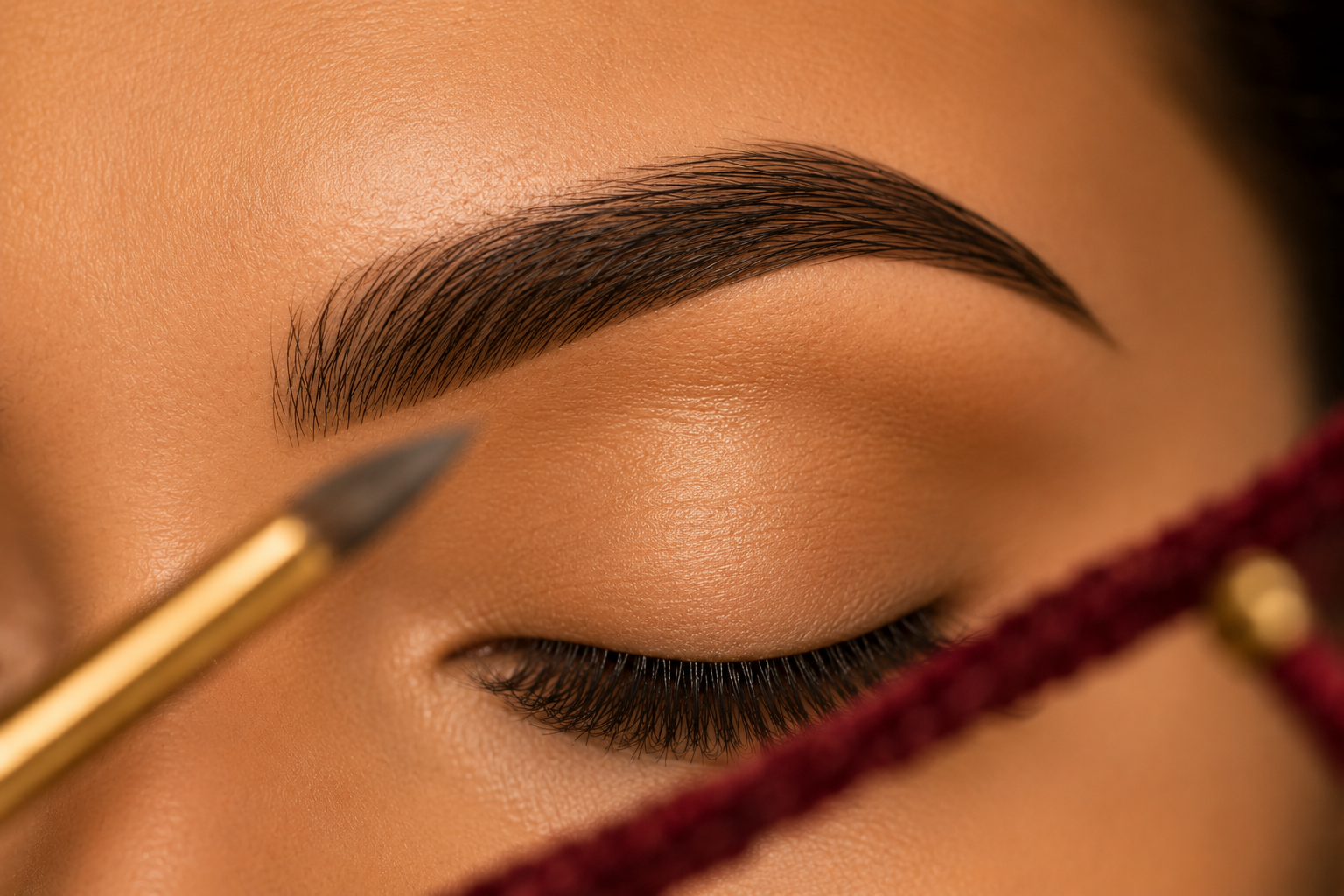
Microblading and eyebrow lamination are frequently compared — but they're not really competing for the same client. One creates brow hair where little exists; the other reorganises the hair you already have. Understanding what each actually does makes the choice much clearer.
What Microblading Does
Microblading is a form of semi-permanent cosmetic tattooing. A fine blade is used to deposit pigment into the upper layers of the skin in hair-like strokes, creating the appearance of individual brow hairs. The result fills gaps, defines the arch, and can create the look of full brows even where very little natural hair exists.
It requires a touch-up session 4–8 weeks after the initial appointment as the pigment settles. After that, results typically last 12–18 months before fading, at which point a colour refresh can be booked.
What Eyebrow Lamination Does
Eyebrow lamination is a chemical treatment that restructures existing brow hairs into a new direction — typically brushed upward — and holds them there for 4–6 weeks. No pigment is deposited and no skin is touched. It works only with the brow hairs you already have.
The result is fluffy, full-looking brows with a "soap brow" or "feathered" effect that photographs beautifully and requires minimal morning grooming.
Side-by-Side Comparison
| Microblading | Eyebrow Lamination | |
|---|---|---|
| What it does | Adds pigment strokes to fill & define | Restructures existing hair direction |
| Longevity | 12–18 months | 4–6 weeks |
| Requires natural hair? | No — creates hair-like appearance | Yes — works with existing brow hair |
| Healing period | 7–14 days (avoid water, sun) | 48 hours (keep dry) |
| Pain | Mild (numbing cream applied first) | None |
| Reversible? | Not easily — fades slowly over months | Yes — fades fully in 4–6 weeks |
| Investment level | Higher (semi-permanent procedure) | Lower (temporary treatment) |
Who Should Choose Microblading
Microblading is the stronger choice when the primary issue is lack of hair — whether due to over-tweezing over the years, naturally sparse brows, alopecia, or medical hair loss. It also suits people who want true zero-maintenance brows: wake up, and your brows are already done, every day, for over a year.
- Very thin or sparse brows with significant gaps
- Brows where most of the natural hair is gone and product alone isn't enough
- People who want a consistent shape without any daily effort
- Anyone ready to commit to a shape for 12–18 months
"Microblading gives you brows on skin that had none. Lamination gives you the best version of brows you already have."
Who Should Choose Eyebrow Lamination
Lamination is the better fit when your brows have enough hair but the problem is direction, flatness, or lack of shape. It's also the right first step for anyone curious about fuller brows who isn't ready to commit to a semi-permanent procedure.
- Brows that lie flat and won't hold product throughout the day
- Hairs that grow in multiple directions and look unruly
- Brows that look thin because the hairs grow sideways rather than up
- Brides who want a groomed, polished look without permanent commitment
- Anyone wanting to try the fluffy brow look before committing to microblading
Three Scenarios to Help You Decide
The bride: You have reasonable brow hair but want them to look perfect for six hours of photos without touching them up. → Lamination (done 3–5 days before the wedding). Assess whether you want microblading for maintenance later.
The professional who wants zero morning routine: You spend 10 minutes on brows every day and would rather not. Your brows have sparse patches. → Microblading followed by lamination on future sessions to keep hairs in the right direction.
The sparse-brow client: Your brows are very thin and pencil isn't cutting it. → Microblading. Lamination cannot add hair that isn't there.
Can You Do Both?
Yes — and some clients do. A common sequence: start with lamination to test what fuller, more defined brows feel like on your face. If you decide you want more permanence, proceed with microblading. Once healed, lamination can be done on the existing natural hairs around the microbladed area to unify texture.
What you should not do is laminate freshly microbladed brows — the healing skin needs time before any chemical treatment. Your artist will advise on timing.
New to eyebrow lamination? Read What Is Eyebrow Lamination and Is It Worth It? for a full breakdown of the treatment.