The right bridal hairstyle is never just about what looks beautiful in isolation. It has to work with your outfit's neckline, the weight of your jewellery, the formality of the ceremony, and your face. A style that photographs perfectly at a sangeet can look wrong at a temple ceremony — and vice versa. This guide is about making that choice clearly, not just showing you options.
The Four Looks South Indian Brides Typically Choose
1. Traditional flowers-and-gajra braid or bun
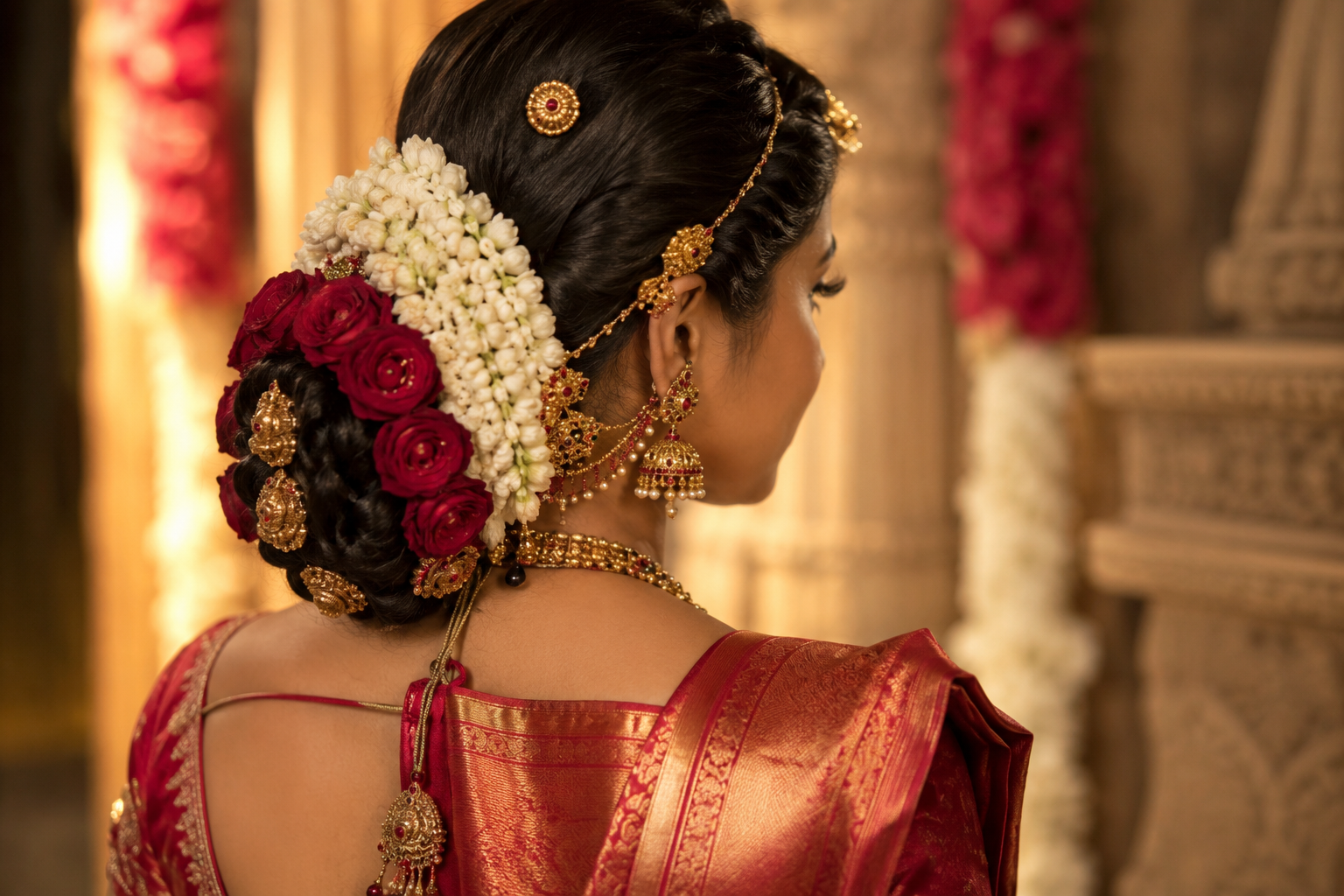
The most classical choice — fresh flowers woven into a long braid or pinned around a low bun. Jasmine gajra is the most traditional, but roses, marigolds, and orchids are all used depending on the ceremony and region. This look has the longest cultural roots and photographs beautifully against a Kanjeevaram or pattu saree. It suits temple ceremonies, muhurtham, and any traditionally structured wedding.
2. Structured updo — chignon or French twist
A smooth, sculpted updo sits higher on the head and creates a clean, modern silhouette. It works across both traditional and contemporary outfits, keeps the nape of the neck and the blouse visible (important if you're wearing an intricately designed back), and holds beautifully through long ceremonies. The chignon can be adorned with temple jewellery, pins, or hair vines to suit the occasion's formality.
3. Half-up half-down
The upper section is gathered or pinned back while the lower half falls in waves or curls. This is a romantic, soft look that works especially well with lehengas and lighter contemporary sarees — it frames the face gently and photographs well in natural light. It's popular for mehendi and engagement ceremonies as well as receptions.
4. Open waves or curls
Loose, styled waves or defined curls worn fully down. This is the least formal of the four and tends to suit receptions, pre-wedding shoots, and sangeet nights where a freer, more luminous look is appropriate. It also works well with heavy earrings, as the hair frames them rather than competing.
"There's no one correct bridal hairstyle — there's only the one that works for your outfit, your ceremony, and your face on that particular day."
Choosing Based on Your Outfit
- Kanjeevaram / pattu saree: The weight and structure of the silk often suits an equally structured look — a traditional braid with flowers or a formal chignon. Open waves can look too casual against such rich fabric.
- Lehenga: More flexibility here. Half-up styles, open waves, and modern updos all work well. The silhouette of a lehenga is less formal than a Kanjeevaram, so a softer hairstyle is often appropriate.
- Contemporary or lightweight silk saree: Almost any style works. This is where you have the most freedom to go with what you personally love.
- Heavy temple jewellery: Updos and braids clear the neck and let the jewellery sit without competition. Open hair and heavy necklaces or maatal can feel visually busy.
Choosing Based on Face Shape
Face shape is one consideration among many — not a hard rule — but it's worth knowing:
- Oval face: The most versatile — every hairstyle shape works. The choice is purely about outfit and preference.
- Round face: Volume at the crown (a higher bun, a chignon pinned with some height) elongates the face and balances the width. Avoid styles that are widest at the cheekbones.
- Long or oblong face: Width at the sides works well — open waves, half-up styles with volume at the sides, or a lower, wider bun rather than a tall one.
- Heart-shaped face: Volume at or below the jaw balances a wider forehead. A low chignon or soft waves pulled slightly to the side work beautifully.
The Trial Appointment — Why It Matters
A bridal hair trial is not optional if you want to be certain on the day. The trial is where you discover that the style you loved in photos needs adjusting for your hair texture, that the flowers you planned sit differently than expected, or that a small tweak to the parting makes the whole look come together. It also tells your hairstylist how your hair behaves — how much it needs, how long it holds a style, what products work on it.
What to bring to your trial:
- Reference photos of styles you love (3–5 is enough — more creates confusion)
- Your dupatta or a piece of the outfit fabric so colour and texture can be considered
- Your hair accessories or jewellery if you already have them
- Clean, unstyled hair — don't blow-dry or curl before the trial
Book your trial at least 4–6 weeks before the wedding, not the week before.
Questions to Ask Your Hairstylist Before Booking
- Have you worked with brides wearing [Kanjeevaram / lehenga / etc.]?
- Do you travel, and what does that involve?
- How many bridesmaids or family members can you accommodate on the same day?
- Do you source fresh flowers, or should I arrange them?
- What is your timeline on the morning — how long does the full bridal look take?
We travel for weddings across Karnataka, Tamil Nadu and Kerala. If you're planning your bridal look and would like to discuss styles, send a message on WhatsApp — we're happy to talk through what will suit your ceremony and outfit before you commit to a booking.
You can also view the full range of bridal services offered at The Perfect Me.